
Spain’s tech ecosystem has entered a new phase of maturity. According to The Spanish Tech Ecosystem Report 2026, produced by Dealroom.co in collaboration with BBVA Spark, Endeavor, Enisa, GoHub Ventures, Kfund, SpainCap, and Wayra, the total value of Spanish startups has reached €125 billion, representing 2.3x growth since 2020, consolidating Spain as the eighth largest tech ecosystem in Europe.
Almost half of the ecosystem’s value is generated by companies founded in the last ten years, and more than half belongs to private companies, a signal that significant latent value remains in the pipeline of high-growth startups.
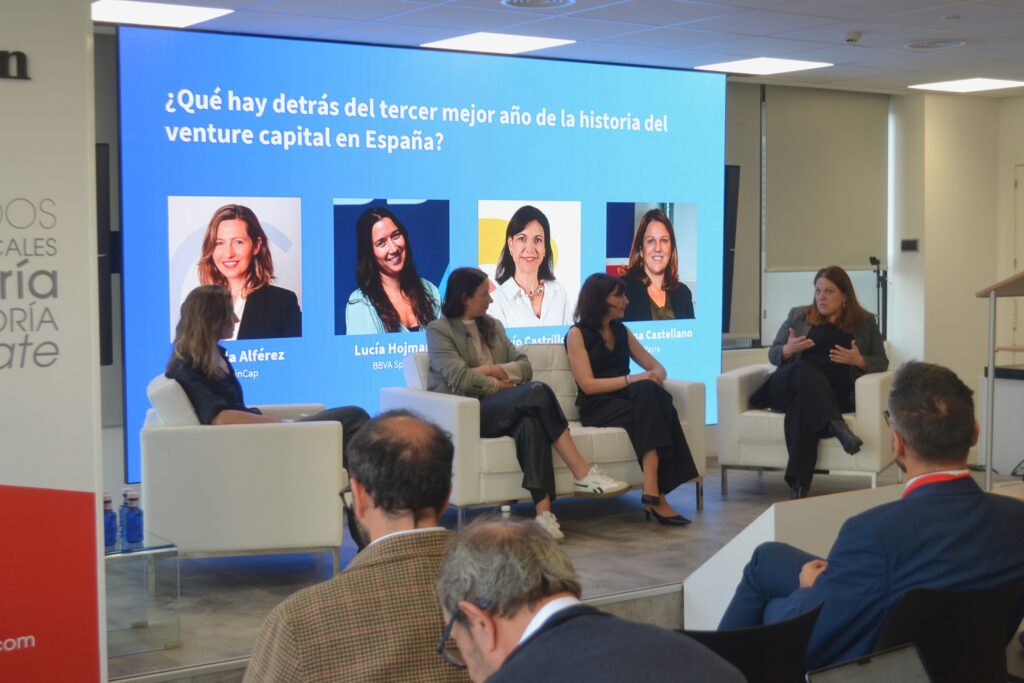
In 2025, Spanish startups raised €3.1 billion in venture capital, making it the third best year on record, behind only 2021 and 2022, both exceptional years globally. The three largest deals of the year were led by Multiverse Computing (€189M, Series B), Perk (€182M, Series E), and Auro Travel (€180M, Late VC), a trio that illustrates the sectoral diversity of the Spanish ecosystem, spanning quantum computing, travel, and autonomous mobility.
Early-stage (0–15M€) and breakout-stage (15M–100M€) funding were among the strongest years on record, while late-stage investment (rounds above €100M) remains the main challenge for scaling the most ambitious projects. More than two thirds of capital raised in 2025 was concentrated in Madrid and Barcelona, which remain the two main hubs of the ecosystem.
Artificial Intelligence as a Central Driver of the Ecosystem
The growth of artificial intelligence is one of the most defining features of this cycle. Almost one in five startups founded in Spain since 2021 is an AI company, a share that has more than doubled compared to the 2010–2020 decade. Spain’s AI ecosystem has grown 3.7x since 2020 (the third highest relative growth in Europe among countries with AI ecosystems above €10 billion) and has increased its share of the total ecosystem value from 7% to 12%.
In terms of fundraising, Spain’s AI startups have raised €3.3 billion since 2020, positioning the country as sixth in Europe by investment volume and fourth by number of rounds.
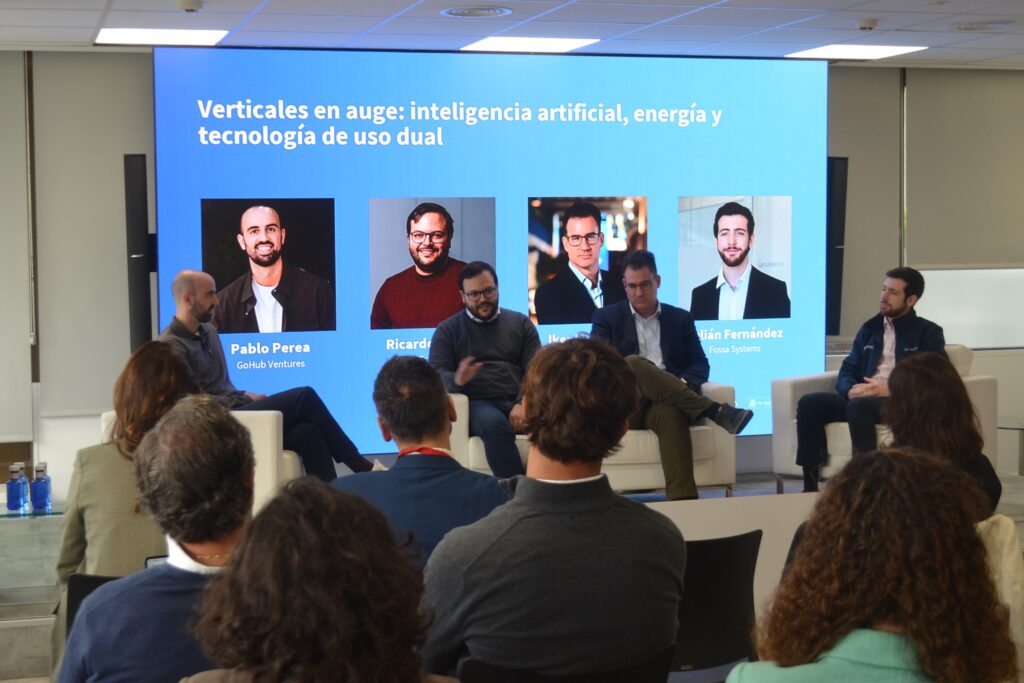
Beyond AI, the report identifies several verticals playing an increasingly important role. Health leads in the number of early-stage startups (0–15M€), Deep Tech leads at the breakout stage (15M–100M€), and Enterprise Software (SaaS) dominates late-stage (above €100M). Climate Tech maintains its position as one of the most dynamic spaces, with Spain ranking seventh in Europe by number of companies. Dual-use technologies and Defense, along with Robotics, are emerging as relevant new categories, in line with European geopolitical and technological sovereignty trends.
Universities and research centres are playing an increasingly visible role. Spain now counts more than 360 VC-backed spinouts, with a combined value of $10.5 billion (four times more than in 2019) and a record of more than $500 million raised in 2025. The Technical University of Madrid, Universitat Politècnica de Catalunya, University of the Basque Country, CSIC, BIST and ICREA stand out as the leading sources of spinout activity.
“Spain keeps becoming a more powerful and repeatable engine for company building. The combination of strong research institutions, fast-growing AI capabilities, and real early-stage depth in sectors like health are creating a more mature ecosystem, broader in talent, stronger in sector specialization, and increasingly ambitious about building category leaders. With more international founders choosing to build from Spain, venture capital has a central role in helping that momentum scale.” noted Pablo Perea, Head of Investments at GoHub Ventures.
Madrid and Barcelona: Two Balanced Engines
Barcelona reaches an ecosystem value of €51.8 billion and raised €1.1 billion in 2025, its third consecutive year above the €1 billion mark. Madrid stands at €48.1 billion in ecosystem value with €1.2 billion in investment, also recording its third best year historically. Both cities have attracted more than €1,000 in investment per capita since 2020.
Valencia positions itself as the third hub with €229 million raised, particularly strong at early and breakout stages, while San Sebastián stands out in late-stage thanks to Multiverse Computing, which has concentrated nearly 70% of local investment since 2020. Bilbao (€68M), Vitoria (€12M), Málaga, Santander and Gijón complete an increasingly distributed map.
The ecosystem attracted more than 600 unique investors in 2025, with venture capital funds accounting for 43% of the total. Spain ranks fourth in Europe by the share of domestic capital in early-stage investment since 2022, and in 2025, domestic investment represented 55% of total volume, a signal of a strengthening local investor base that coexists with growing international appeal across all stages of the funding cycle.
Exits and the Multiplier Effect: The Ecosystem Starts to Close the Loop
2025 saw 44 exits, the third best figure on record after 48 in 2021 and 58 in 2022. The most notable transactions included the acquisitions of vLex, Wallapop, and Onum. Spain now has a pipeline of more than 3,300 VC-backed companies, of which 257 are at the breakout stage, 48 are scaleups and 40 have reached $100 million in revenue or $1 billion in valuation.
The report also highlights the talent multiplier effect. Former employees of unicorns and companies with $1 billion+ exits, including Glovo, Cabify, and Job&Talent, are giving rise to a new generation of founders who are better prepared, with first-hand operational experience and the ability to scale faster. This is one of the strongest signals of the structural maturity of the ecosystem.
About The Spanish Tech Ecosystem Report
The Spanish Tech Ecosystem is a yearly report elaborated by the global data platform Dealroom.co in collaboration with Kfund, BBVA Spark, Endeavor Spain, GoHub Ventures, Wayra, SpainCap, and Enisa to study the state of the startup ecosystem in Spain. The study aims to provide information on the current state of the sector, understand the investments made over the last year, and position Spain relative to its European and global peers to evaluate and understand the current state of the ecosystem in Spain.
For a deeper analysis of the report’s findings, read our full breakdown: Insights on The Spanish Tech Ecosystem Report 2026.

