
In early-stage venture capital, the challenge isn’t just identifying winner: it’s doing so early, and often with very little to go on. Finding the one or two breakout startups that will return an entire fund feels a lot like playing Where’s Wally?. But in this version, Wally’s appearance changes every year, and it takes a decade to know if you picked right.
Ironically, while the venture capital industry funds digital disruption, it has been slow to disrupt itself. Many processes still rely on networks, PDFs, and gut instinct. But a shift is underway. The rise of data-driven venture capital is changing how investors source, evaluate, and support startups. With new data sources and AI-powered tools now readily accessible, we’re moving beyond buzzwords into a new era of data-enabled decision making.
Rethinking the VC Model in the Age of AI
The traditional VC model follows a power-law distribution: most bets fail, a few return the fund. Despite this, the industry continues to rely on instinct over evidence. Deal flow remains narrow, due diligence is manual, and access is often limited to the well-networked. With only a few shots at success, failures in the screening and evaluation process can be incredibly costly.
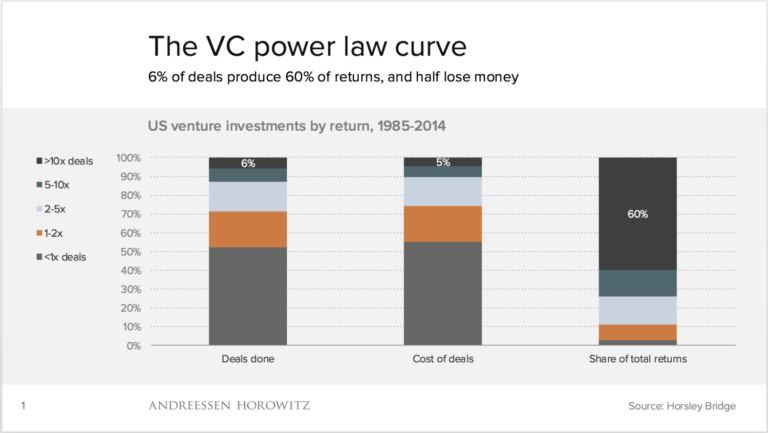
Data-driven venture capital challenges that model. By layering AI and data into every stage, from sourcing to exit, funds can widen their funnel and reduce bias while avoiding “false negatives” (great companies overlooked) and “false positives” (bad bets dressed up well). It allows VCs to form sharper theses, spot underrepresented talent, and act with more speed and conviction.
The Rise of AI-Native Investment Workflows
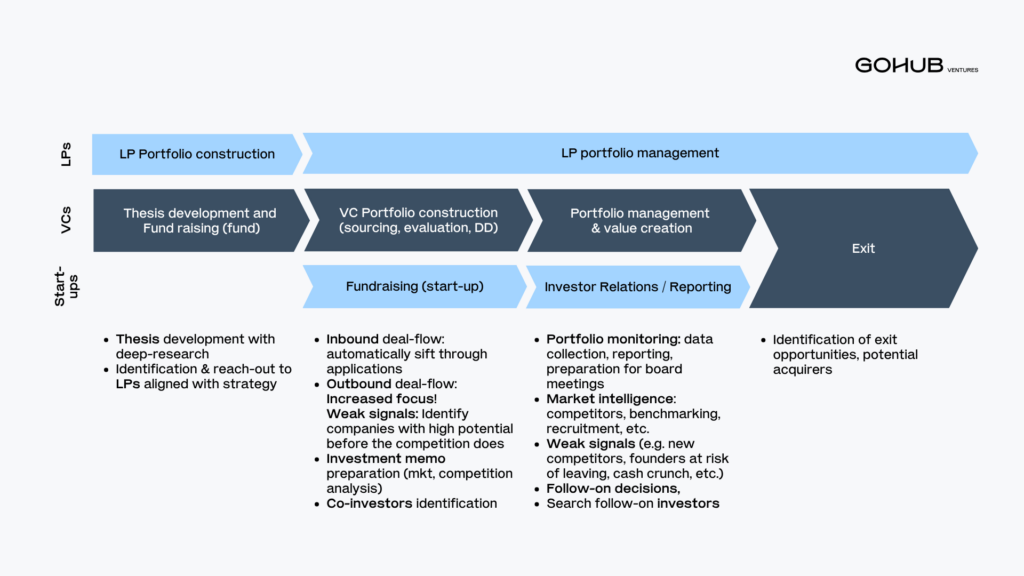
Every stage of the VC pipeline is now being enhanced by technology. From sourcing and screening to due diligence and portfolio monitoring, data and AI are becoming embedded in daily workflows:
- Automation can quickly triage thousands of inbound applications.
- Natural language processing can summarize pitch decks.
- Predictive analytics can flag early traction.
- Gen-AI can draft investment memos.
And this isn’t theoretical, it’s already happening. Pioneering funds are integrating alternative data sources (web traffic, hiring trends, or product reviews), private data permissioned access (via Stripe, Shopify, or Google Analytics), and advanced analytics into their workflows. The result: not only faster decisions but better ones.
The success of data-driven venture capital depends on the relevance and quality of the data, and that varies across investment stages. At the earliest stages, the most telling indicators are often qualitative: team background and early product-market fit. Later-stage investments lean more on metrics like CAC, churn, LTV, or growth rates.
That’s why the smartest funds are adopting multi-layered models. They combine structured and unstructured data, public and private sources, and adjust their models based on company maturity. Public data platforms like Crunchbase offer reach but are often outdated. In contrast, private data and real-time metrics, while harder to access, can be far more predictive.
The Big Question: Build or Buy?
While the benefits of data-driven venture capital are clear, the path isn’t always straightforward. Building a proprietary data and AI infrastructure is expensive and time-consuming, especially for smaller funds. However, relying entirely on third-party platforms risks losing differentiation. The emerging solution is a hybrid model:
- Use off-the-shelf SaaS tools for repetitive or low-value tasks like data collection, formatting, and reporting.
- Invest in proprietary analytics and custom workflows where unique insights offer a competitive advantage.
This approach also reduces the burden on startups, who often face repetitive data requests in different formats from investors using disparate systems.
The Future of Venture Capital Is Data-Driven
Incorporating data and AI into VC isn’t about replacing judgment, it’s about empowering it. With more information, smarter tools, and fewer manual bottlenecks, investors can spend more time doing what they do best: supporting great founders and making bold bets on the future.
This shift won’t be uniform; some funds will lead, others will lag. But the direction is clear: data-driven venture capital isn’t just a trend; it is the next competitive frontier.