
In the age of functional medicine, blood tests have quietly become the most valuable entry point in healthcare as over 70% of medical decisions rely on them. Yet access remains slow, and the data itself is chaos: fragmented, unstructured, and buried in outdated formats that make it almost useless. As a solution, hundreds of diagnostics startups and biomarker platforms are popping up across the globe, trying to fill the void that traditional healthcare has failed to address.
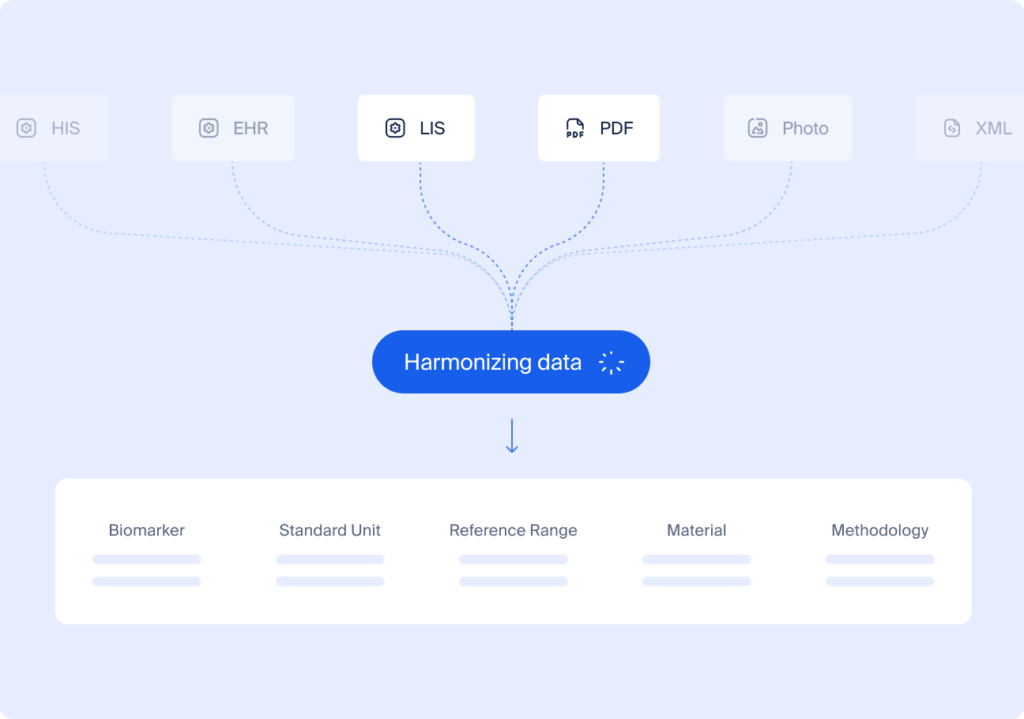
Now imagine a health data infrastructure layer that unifies, digitizes, and connects lab results across systems and geographies. A universal API that turns chaos into clarity and raw numbers into the foundation of the new era of personalized, biomarker-driven medicine. This is the mission at the heart of OpenHealth, and we’re proud to support it by participating in their recently announced $3M seed round.
The Founding Team: A Multidisciplinary Engine
Founded in Berlin in 2023, OpenHealth brings together three complementary leaders with diverse expertise:
- Gerrit Glass (CEO and co-founder): A passionate biohacker, athlete, and serial entrepreneur with deep experience in B2B sales, venture launching, and international expansion, Gerrit is driving OpenHealth’s strategic growth in emerging markets.
- Dr. Frederic Münch (CPO and co-founder): A physician-scientist who leads the ICU at Charité Berlin, Frederic combines frontline medical expertise with a background in chemistry (ETH Zurich) and leadership in preventive medicine. His ICU work in Brazil and fluency in Portuguese fuel his dedication to global healthcare initiatives and medical innovation.
- Frank Krüger (CTO and co-founder): A seasoned healthtech builder overseeing technological development at OpenHealth. Frank previously spearheaded the creation of a successful home blood test platform in the USA, bringing invaluable experience in designing scalable, patient-centric health technologies.
Together, this multidisciplinary team unites clinical, technical, and entrepreneurial expertise to tackle one of healthcare’s biggest challenges: fragmented lab data.
Born at the Right Time
OpenHealth sits at the crossroads of unstoppable tailwinds:
- The biomarker explosion: Blood data is becoming the new currency of health. Panels are multiplying at double-digit rates, longevity clinics are spreading like wildfire, and wellness platforms are turning diagnostics into a consumer habit. As highlighted in Galen Growth’s latest report, wellness and diagnostics are two of the fastest-growing subsectors in Europe’s first half of 2025. New subscription models are reshaping how people engage with health, moving from reactive to proactive. The market is drowning in supplements, yet the conversation is shifting: guesswork is over, people want biomarker-driven answers. In the coming years, supplementation without testing will look as outdated as prescribing antibiotics without lab work.
- AI-driven predictive models: AI is the main driver of preventive health and functional medicine. Through advanced machine learning and deep learning methods, AI can analyze complex, multi-modal biomarker information (i.g. clinical records, imaging, genomics, etc.) to uncover patterns invisible to human analysis. This enables accurate prediction of future disease onset, tailored early interventions, and the discovery of novel biomarkers, transforming healthcare data into predictive models. However, the key enabler is the availability of extensive, high-quality, and harmonized biomarker datasets that empower these AI models to learn reliably and generalize across populations.
- Efficiency in healthcare systems: Traditional healthcare systems are prioritizing the digitalization of health data infrastructure and automation of clinical and non-clinical workflows, according to McKinsey’s latest report. Proof of that are the investments in H1 2025. OpenHealth fits right into this need: by harmonizing lab data, it reduces friction between doctors and patients, accelerates visits, and frees up valuable clinical time.
- Data experience as differentiation: Healthtech companies, clinics, and labs now compete not only on quality of care but also on data experience. UX is no longer a nice-to-have, it’s survival. The winners will be those who offer seamless, personalized, data-driven experiences. Those who fail to modernize will fade into irrelevance, because in healthcare, trust now flows through data clarity.
Rapid Growth with Visible Impact
In less than a year, OpenHealth has moved from an idea to a business with measurable impact. The company has already developed more than 3,500 biomarkers, processed over 4,000,000 data points, built a client base stretching from Brazil to Europe, and achieved pilot conversion rates that most startups can only dream of. Along the way, it has secured partnerships with major players: from Latin America’s largest diagnostics and hospital groups to market-leading fitness and wellness players, evidence that the problem it is solving resonates across very different parts of the health ecosystem.
What makes this trajectory even more striking is the pace at which it has unfolded. The team first validated the model in Brazil’s highly competitive, privately driven diagnostics market, and then rapidly established a foothold in Europe, where digital health adoption is accelerating and large corporates are beginning to recognize the importance of harmonizing and leveraging data. This dual presence is more than expansion; it underlines how universal the challenge of fragmented lab data really is.
The business model itself reinforces this growth. By charging volume-based subscriptions with a “land and expand” approach, OpenHealth grows alongside its clients. A small lab or clinic may start modestly, but as the number of tests they process increases, so does their reliance on the platform. The result is compounding value on both sides.
The effect is already visible. Longevity clinics integrating the API have seen their user base grow by nearly a third, proving that harmonized lab data does more than streamline processes and build longitudinal data; it’s a driver of patient engagement, growth, and the enabler of a preventive system.
Toward the World’s Largest Biomarker Database
Blood is only the first step. The team’s ambition is to build the world’s largest multimodal biomarker database, providing a deeper understanding of human biology and behavior. We now know that phenotyping the human body is far more complex than training a model on top of a massive metabolic or genomic dataset. True insight requires connecting different biological and molecular layers to deeply understand mechanisms of action, disease progression, and prognosis.
That is the vision driving OpenHealth: to create a shared, multimodal and personalized health data infrastructure that transcends geographies, labs, and healthcare systems. Every test processed through OpenHealth adds to this network, compounding into a resource that no single clinic, lab, or platform could ever build in isolation.
But the vision goes further. Once scale is reached, OpenHealth evolves from harmonizing data to predicting health outcomes. A predictive engine that doesn’t just display results, but anticipates risk, detects early signals of disease, and guides both patients and physicians toward preventive action.
Imagine a system where millions of longitudinal data panels feed into medical intelligence models, turning raw numbers into early warnings, personalized interventions, and a scientific backbone for conscious supplementation and longevity.

