
Cancer treatment has never had more options. More than 200 oncology drugs have been approved since 2000, and precision medicine has transformed how tumors are characterized. The market for it is expected to grow from $101B in 2024 to $463B by 2034. Yet around half of patients fail to respond to their first line of treatment, and a study of 54,000 patients published in Nature Medicine this year found that only 8% end up receiving a therapy chosen through genomic testing.
Prevision Medicine approaches the question from the other end, by testing drugs directly on the patient’s own living cancer cells. Its platform exposes those cells to around 100 oncology drugs in parallel, measures which ones kill them selectively, and returns a ranked report to the treating oncologist within approximately 3 days. We are proud to participate in their $5.4M seed round.
How Cancer Treatment Is Chosen Today
For most patients, treatment follows clinical guidelines set by ESMO and EHA, which define first, second, and third line therapy by tumor type on the basis of Phase III trial evidence. That framework works well for the large majority of cases. The difficulty begins when those options run out, which affects 15% to 30% of patients with advanced disease in Europe. They either exhaust the guideline pathway or present tumors too rare for one to exist.
Those cases go to a Molecular Tumor Board (MTB), where oncologists, geneticists, and pathologists review the tumor’s genomic profile together. They look for a mutation that points to a drug. Often there is not one, since a large part of the oncology arsenal was never organized around specific mutations. What is left is a judgment call, and it falls on patients who can least afford one to be wrong. Someone with advanced disease rarely has the months that a failed line of treatment costs. What these patients need is a way to get the first choice right. That is the one thing the current process cannot give them.
Where the Process Runs Out
The MTB committee is then left choosing between off-label options and clinical trials on clinical judgment alone. It has no measured indication of which drug this particular patient will respond to. Each ineffective cycle costs a health system between CHF 10,000 and 40,000 while the disease keeps progressing. Payers have started to push back on exactly that, asking for health-economic evidence before covering anything new.
Academic and Business Excellence
The R&D team co-invented the technique that Prevision now commercializes. Pharmacoscopy, the clinically validated platform underpinning Prevision’s commercial products, was developed in Prof. Berend Snijder’s laboratory at ETH Zürich in the mid-2010s, and it works in the opposite direction to genomics. Rather than looking for a mutation that predicts whether a drug should work in theory, it exposes the patient’s living cancer cells to the drugs themselves and measures which ones kill the cancer while leaving healthy cells intact.
Over a decade, that laboratory has turned the idea into clinical results and produced companies as well as papers. Allcyte, co-founded by Snijder and later acquired by Recursion/Exscientia, and Graphtx both came out of it. Prevision’s own laboratory sits on ETH’s Hönggerberg campus, and researchers trained in the Snijder Lab lead its clinical programs. That density of scientific talent, clinical opinion leaders, and specialized capital is difficult to assemble anywhere else in Europe.
A large part of our conviction came from how little distance there is between that science and the company built on it, and the team behind it. Our relationship with the team was good throughout the whole process of getting to know the company, and we valued their professionalism, their humility, and how well they complement each other.
- Philip Zimmermann (CEO) brings over two decades in health tech ventures, and led his former company, Nebion, to its exit with Immunai.
- Valentin Matillon (CBO) has spent his career in techbio startups at the intersection of finance and personalized medicine, including as CFO of Sophia Genetics up to Nasdaq listing.
- Yannik Severin (CSO) co-invented the platform and steers the R&D team, having previously been a scientific co-founder of Graphtx.
- Berend Snijder (Chairman at company founding) is one of the originators of pharmacoscopy and scientific co-founder of Allcyte and Graphtx.
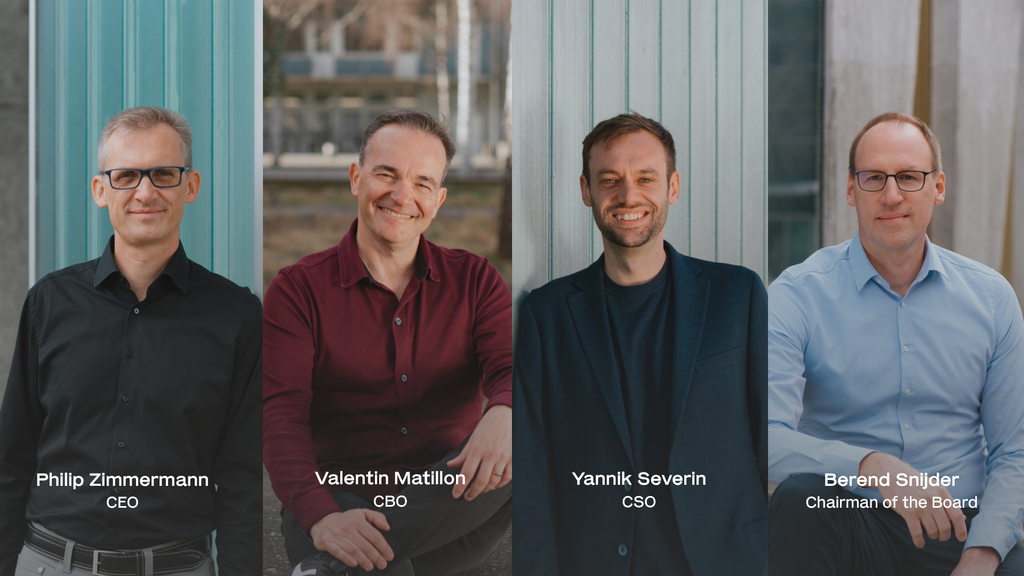
That degree of alignment between the science and the business is unusual for a company at this stage. They are supported by a clinical advisory board that includes Prof. Dr. Thomas Pabst, who runs the leukemia group at SAKK, the most relevant oncology trial network in Switzerland, Prof. Dr. Gabriela Baerlocher, a distinguished expert in hematology and Lead Physician at the Hirslanden Klinik, and Prof. Dr. Michael Weller of Universitätsspital Zürich, one of Europe’s leading references in neuro-oncology. In a market where clinical opinion leaders decide what gets adopted, that matters.
The Opportunity: Turning Pharmacoscopy into a Scalable Solution
The science was never the obstacle. What kept pharmacoscopy out of routine clinical practice was cost.
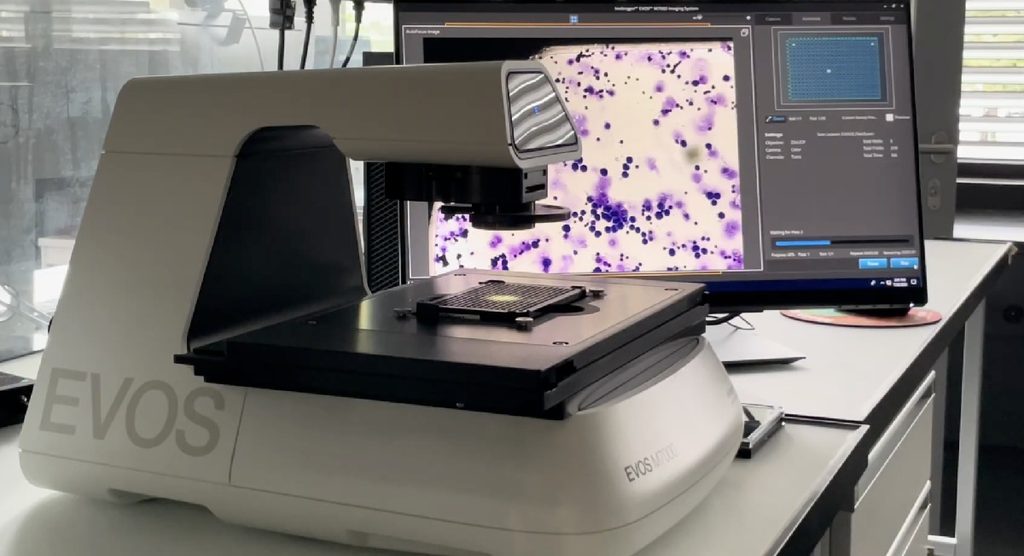
Running it used to require specialized fluorescent reagents and microscopy that only a research laboratory could justify. Prevision rebuilt the process around Giemsa, the standard stain every pathology laboratory in the world already uses. It did so through a sample preparation method patented and licensed exclusively from ETH. Preparing a sample now costs a small fraction of what it did, and so does equipping a laboratory to run the test.
That single decision moves pharmacoscopy out of research and into something a hospital laboratory can run as a routine service. It works because the company’s AI recognizes cancer cells from their shape alone, with no fluorescent marker to guide it. As a result, the cheaper stain costs nothing in accuracy. The preparation method and the model were designed around each other, and neither delivers the advantage on its own.
Because the equipment burden is low, Prevision can sign regional pathology and oncology laboratories that adopt the protocol, process samples locally, and send the images to its cloud for analysis, which is what determines how the company grows. Prevision keeps the model, the accumulated dataset, and the relationship with pharma, while the partner handles the physical work. Geographic expansion happens without building laboratories country by country, and each new partner deepens the analytical layer rather than duplicating it.
Selling in Healthcare: Evidence and Trust
In healthcare, evidence is the real barrier to entry as no oncologist prescribes and no insurer reimburses without it. Building it takes years that cannot be compressed.
Prevision’s team is the only one in the world to have published two interventional trials in functional precision medicine. They appeared in Cancer Discovery and Haematologica. In the first, 23% of patients with advanced blood cancers achieved exceptional clinical responses when treatment was guided by the platform. In the second, patients who had exhausted every registered option responded at 47% against 25%. Those given the top-ranked drug survived more than three times longer.
Nature Medicine named pharmacoscopy in January 2026 as one of four key strategies for the future of precision oncology, and a recent review counts 18 active trials in functional testing worldwide. Some of the most advanced are run by members of Prevision, including a fully randomized, interventional trial in acute myeloid leukemia.
Additionally, grant applications with cumulatively over 1,000 patients across Europe have been submitted for funding. The company starts in blood cancers, where cells can be tested most readily, and is extending the same approach into solid tumors.
Why We Invested in Prevision Medicine
Four things carried the decision.
- A technique that has just become economically viable. The patent turns pharmacoscopy from an expensive experiment into a service that can be delivered at scale.
- Evidence that compounds. Two published interventional trials and a randomized pivotal study underway, built over fifteen years of research that a new entrant cannot shortcut.
- A large market with an unsolved problem at its center. Patients who exhaust clinical guidelines are where cost and clinical need to concentrate, and genomics reaches only part of them.
- A team where science, product and commercial experience line up.
Oncology will keep adding drugs faster than it adds ways to choose between them. Payers will keep demanding proof before funding a cycle that may not work. Prevision Medicine sits exactly where those two pressures meet, giving the oncologist a measured answer at the moment the decision is made.

