
Startups are built on vision, agility, and rapid execution. However, as they scale, financial discipline, strategic planning, and risk management become increasingly critical. A seasoned CFO can be the difference between sustainable growth and financial mismanagement.
Despite this, many founders delay hiring a CFO until financial complexity overwhelms them, often when it’s too late. The right CFO isn’t just a finance lead, they’re a strategic operator ensuring sustainable growth, capital efficiency, and fundraising preparedness. In essence, a startup CFO acts as the CEO’s financial compass, guiding decision-making with a long-term, data-driven approach.
When Should a Startup Hire a CFO?
A common mistake among founders is waiting too long to bring in a CFO. Many assume they only need one when preparing for a major fundraising round or IPO. However, by then, much of a CFO’s value (financial infrastructure, capital allocation, and risk management) has been lost.
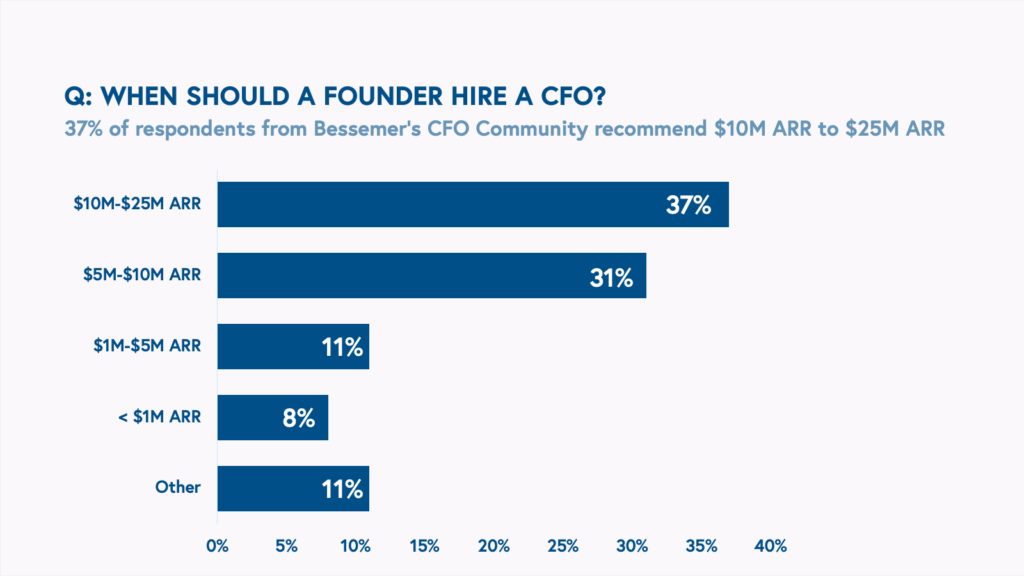
So, when is the right time? The best startups hire a CFO soon after securing their first significant funding round, typically around Series B. By this stage, the company is scaling rapidly, investor expectations are rising, and financial complexity is increasing. According to a survey by Bessemer Venture Partners, 37% of CFOs in its community identified $10M to $25M in ARR as the ideal stage for hiring a CFO in a startup.
A CFO brought in early can establish the financial foundation necessary for long-term growth, ensuring that when the next fundraising round approaches, the company is financially structured, data-driven, and well-prepared. This includes preparing an effective data room for investor confidence.
The CFO’s Role in a Scaling Startup
Hiring a CFO for your startup isn’t about filling a finance seat. It’s about bringing in a strategic leader who optimizes every aspect of financial decision-making. Here’s how they create value:
1. Driving Growth, Not Just Managing Costs
A strong CFO doesn’t just cut costs, they enable growth. They work closely with the CEO and leadership team to ensure that the financial strategy supports business expansion. Whether it’s assessing new market opportunities, adjusting pricing strategies, or balancing growth and profitability, the CFO’s role is to maximize long-term enterprise value.
A great financial leader doesn’t just answer, Can we afford this? They help frame critical strategic questions, such as: How much should we invest in marketing this month? or Can we hire a new account executive now?
They don’t just crunch numbers, they translate financial insights into business strategy. They consider the company’s trajectory, stakeholder expectations, and evolving market conditions, maintaining a dynamic view of the next three to five years. Sometimes, the right move is burning a little more cash in the short term to reach a milestone that unlocks the next financial opportunity. The best startup CFOs help navigate these trade-offs with precision and foresight.
2. Optimizing Treasury Management and Cash Flow
Cash flow issues are among the most common reasons startups fail. A CFO ensures that the company maintains financial stability while fueling growth. This includes managing burn rate, forecasting runway, optimizing working capital, and securing additional liquidity when necessary. They also bring discipline to budgeting and financial planning, ensuring that the company scales efficiently without running out of cash.
For startups, cash is the most scarce and valuable resource, more than revenue, more than profit. A CFO is the guardian of this resource, striking the right balance between growth and sustainability. This often involves negotiating with the CEO, board, and investors to determine how aggressively the company should spend. The CFO must be willing to engage in these discussions and hold the financial line when necessary.
3. Navigating Crises and Managing Risk
Economic downturns, regulatory changes, or unexpected market shifts can derail a company. A startup CFO plays a critical role in preparing for financial uncertainties, ensuring that the business has contingency plans in place. They build financial resilience by stress-testing business models, diversifying revenue streams, and securing necessary credit lines or alternative financing options before a crisis hits.
A great CFO ensures that the CEO and board members don’t have sleepless nights over financial uncertainty. They provide clarity, stability, and confidence, even in turbulent times.
The CFO’s Critical Role in Fundraising
Fundraising is a critical milestone in a startup’s journey, and having a CFO in place well before a funding round is essential. Many founders make the mistake of bringing in a CFO when they are already deep into investor conversations. At that point, it’s too late to fix underlying financial inefficiencies or optimize the company’s financial narrative.
A great CFO brings structure to the fundraising process by:
- Creating a compelling financial narrative: Investors don’t just look at revenue numbers, they want to see a strong financial model that demonstrates sustainable growth and clear unit economics. Building a compelling pitch deck that translates this financial story is where the CFO’s work becomes visible to the outside world. The CFO ensures that financial projections are realistic, data-driven, and aligned with market opportunities.
- Managing investor relationships: A CFO ensures that due diligence is smooth, financial data is reliable, and the company presents itself as a high-quality investment. Moreover, a CFO leverages their investor network, bringing potential investors to the table before introducing the CEO or founders. By managing initial investor interactions, the CFO maximizes the leadership team’s time and sets the stage for successful engagements.
- Optimizing deal terms: The CFO plays a critical role in negotiating favorable funding terms, protecting the company from excessive dilution, and ensuring that capital is raised strategically rather than out of desperation. Many of these decisions come down to avoiding common fundraising mistakes that repeat across early-stage rounds. They also evaluate various financing options, whether SAFE notes, convertible notes, or equity financing, to determine the best approach for the company’s current stage and future goals.
- Timing the fundraising process: A CFO develops a comprehensive financing strategy that outlines the timing, amount, and sources of funding. This ensures that the company secures the right capital at the right time, preventing overextension or unnecessary dilution. They also forecast future capital needs to align fundraising efforts with growth milestones.
In summary, a CFO’s involvement in fundraising extends beyond number-crunching. They are instrumental in shaping the company’s financial strategy, building investor confidence, and securing the necessary capital under favorable terms to drive the company’s growth and success.
What to Look for in a Startup CFO
Hiring the right CFO is one of the most important decisions a startup can make. Not all finance leaders are created equal, and the best CFOs for startups possess unique qualities that go beyond traditional corporate finance expertise.
- Strategic mindset: Beyond reporting numbers, they shape company strategy.
- Operational expertise: They understand the mechanics of scaling.
- Fundraising experience: They navigate investor relations and financial modeling.
- Risk management skills: Identifying threats before they escalate.
- Leadership and communication: Aligning teams and stakeholders.
For startups that have raised their first significant round, hiring a CFO is no longer a luxury, it’s a necessity. The right CFO drives financial strategy, ensures disciplined growth, and secures long-term success. Founders who prioritize this hire early gain a significant competitive advantage in an increasingly complex startup landscape.