
We seem to have moved past the downturn of digital health, as 2025 has started on a high note. The sector is buzzing with activity: from the noise around Hims & Hers and telehealth prescriptions for GLP-1 inhibitors, to the rise of biomarker analysis and consumer testing, and Hinge Health filing to go public.
In Europe, AI-driven digital health investment is on track to reach levels not seen since the 2021 boom. So far in 2025, European digital health startups deploying AI as part of their offering have raised $701 million, according to Dealroom. If the momentum continues over the next nine months, this figure could surpass each of the past three years and approach the $3.3 billion record set in 2021.
But what market trends are fueling this digital health investment surge in 2025?
Proactive Care and Early Detection
Europe is at an inflection point, with consumers increasingly taking control of their own health as traditional healthcare systems struggle to keep up with current trends. In 2024, direct-to-consumer (DTC) models outperformed other approaches, largely driven by the rising demand for GLP-1 inhibitors, supplements, and longevity products. As outlined in our blogpost Technologies to Watch in 2025, this reflects a shift in how people perceive health, moving from reactive care to a proactive and preventive approach.
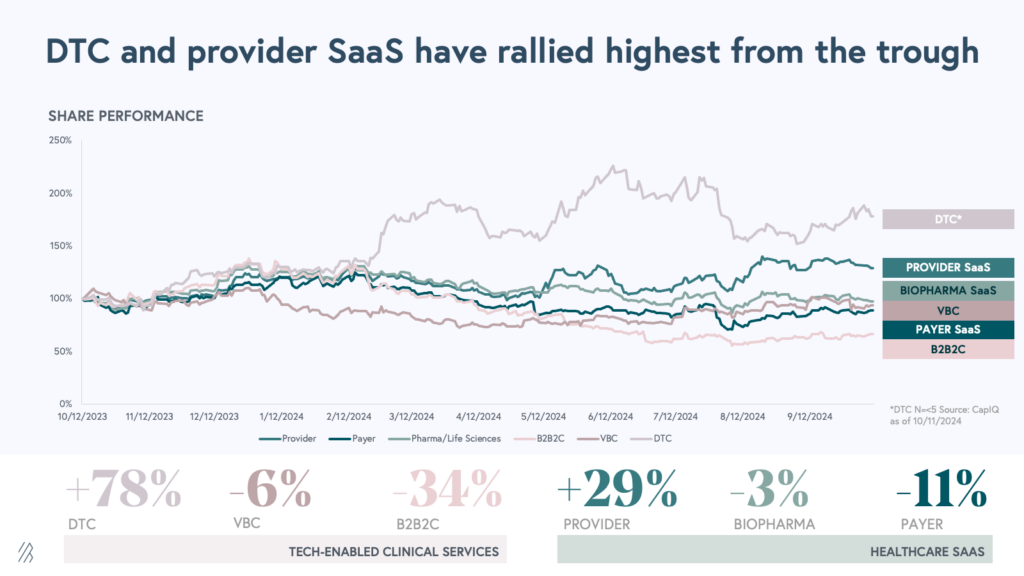
There are several factors accelerating this transition:
- Social literacy is encouraging people not only to live longer but to live healthier. More than 50% of chronic disease cases are preventable by adopting proactive healthcare habits.
- There’s a growing demand for direct access to health data and preventive monitoring solutions.
- 80% of European healthcare budgets are still allocated to chronic disease management, while public systems struggle with workforce shortages and long wait times, making them unable to keep up with rising healthcare needs.
- Public payers and insurers prioritize immediate ROI, acute care, and traditional medicine, making long-term investments in prevention less attractive for them.
As a result, more consumers are willing to pay out-of-pocket for faster, more personalized alternatives that offer health data points and biological insights for early disease detection and risk assessment.
Investment is not getting behind: VCs are following the cultural shift, not just the money. In the past months, we’ve seen major funding rounds in digital health startups.
Operational Efficiency in Healthcare Organizations
According to a Deloitte US Center for Health Solutions survey, more than 70% of C-suite executives across Australia, Canada, Germany, the Netherlands, and the United Kingdom identified operational efficiencies and productivity gains as top priorities for their organizations in 2025.
Across geographies, many healthcare systems have reached a critical juncture. They face:
- Budget constraints
- Staff shortages and clinician burnout
- The pressure to integrate new technologies
- Evolving consumer expectations
Are AI Agents Ready to Boost Healthcare Systems Efficiency?
AI agents are gaining traction, but healthcare’s data governance, interoperability, and infrastructure fragmentation pose challenges. However, health systems are gradually taking more responsibility for digital transformation and automation of their infrastructures.
While we might be a long way from fully autonomous AI agents in healthcare, the near future will likely see more contained agentic systems focused on automating repetitive administrative tasks. These could evolve into multi-agent systems, where different AI agents interact as they move toward more advanced, all-in-one solutions.
At the same time, a significant challenge for AI in healthcare is demonstrating a clear return on investment (ROI) to payers. The rapid expansion of the AI scribe market highlights this issue, as the industry lacks standardized metrics to assess the value of these costly emerging technologies. While providers are primarily adopting AI scribes to alleviate physician burnout, proving their financial benefits will be crucial for long-term adoption.
Deploying AI agents in healthcare will come with several challenges, from financial hurdles to ethical considerations. As AI agents automate healthcare processes, clinicians will need to ensure the reliability of their outputs while maintaining validity through human supervision. Moreover, strict data privacy regulations must be upheld to ensure secure patient data management.
Only by addressing these challenges can we expect AI agents to enhance our healthcare experience.

