
Three weeks ago, I read an article about a newly released study on real-world evidence in AI for mammography screening programs that blew my mind. It made me reflect more broadly on the role of AI in breast cancer screening, particularly across European healthcare systems. I’ve since spent time digging deeper into the topic: understanding triaging, clinical evidence on AI algorithms, cost-effectiveness, and radiologist workload from a European perspective.
I’ve learned that AI will not bring screening to the masses. It’s all about reducing costs by being precise. We have clinical evidence momentum, but economics, protocols, and long-term sustainable models still need to be settled. We can have outstanding clinical evidence, but if it doesn’t run in an economically sustainable way, it will not be implemented.
Beyond Efficiency and Human Workload
Breast cancer remains the most common cancer among women worldwide. Despite decades of screening programs, studies estimate that close to 20% of cancers may be missed at initial mammography, especially in women with dense breast tissue (a topic we’ll come back to shortly). At the same time, recall rates often range between 8–12%, meaning millions of women are called back for additional tests, even though the vast majority will not have cancer.
This highlights a fundamental tension at the heart of screening: a sensitivity problem at first-line imaging, and, in higher-risk or dense-breast populations, a specificity problem, leading to unnecessary biopsies, higher healthcare costs, and clinical overload.
Screening Workflow Standard
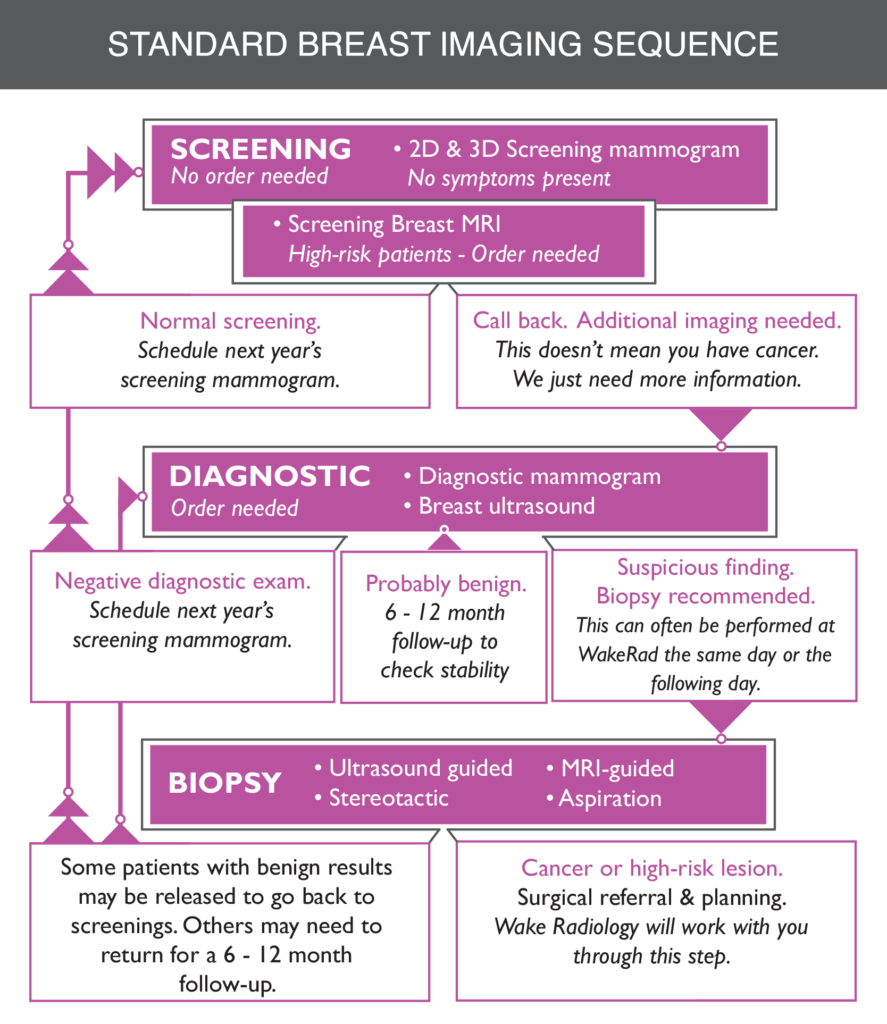
Breast cancer screening follows a largely standardized diagnostic pathway. Population-level screening begins with mammography, which remains the first-line imaging modality for most women. When findings are inconclusive or suspicious, patients are referred for additional mammographic views or breast ultrasound to further characterize lesions.
Breast MRI is used in a much smaller subset of cases, typically a low single-digit percentage of screened women, mainly in patients with dense breast tissue, elevated genetic risk, or unresolved diagnostic uncertainty. While MRI offers significantly higher sensitivity, its use is intentionally limited due to cost, capacity constraints, and higher false-positive rates.
In short, the system is carefully balanced but fragile. Improving sensitivity (fewer false negatives) often comes at the cost of specificity (more false positives), and vice versa. This is where AI algorithms come in.
Clinical State of AI Algorithms in Breast Cancer Screening
As mentioned earlier, The Lancet published one of the largest AI radiology studies to date, and clinical results were impressive.
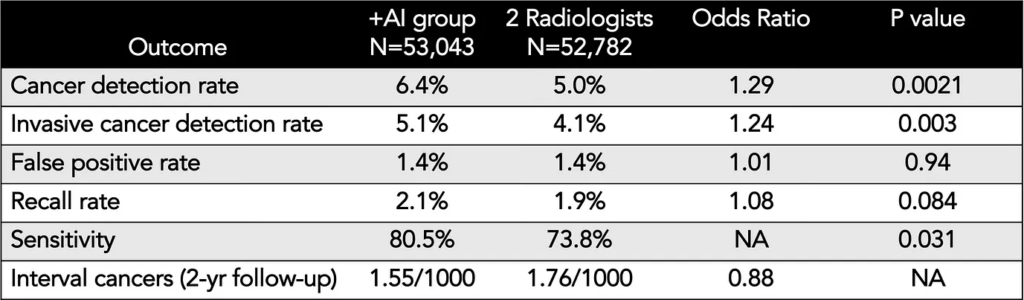
This prospective, randomized clinical trial was embedded in a real-world breast cancer screening program and included more than 100,000 women. Participants were assigned either to standard mammography reading or to mammography supported by an AI system fully integrated into routine clinical workflows. Outcomes were tracked longitudinally, including the detection of interval cancers between screening rounds.
AI-supported screening led to a meaningful improvement in clinical outcomes. Cancer detection during screening increased from 74% to 81%, while interval cancers (typically more aggressive and clinically consequential) were reduced by 12%. Importantly, the AI-assisted group showed fewer invasive and advanced tumors, suggesting earlier detection. These gains were achieved without increasing false positives, which remained stable at around 1.5%.
Similar real-world studies across multiple geographies report consistent improvements. A nationwide study in Germany involving over 460,000 women showed a 17.6% increase in cancer detection with AI-assisted reading. In the United States, a large study covering nearly 580,000 women demonstrated a 21.6% improvement when AI was used within a multistage workflow to identify at-risk cases.
Clinical momentum seems irrefutable. Now let’s consider other perspectives.
What About Healthcare Costs and Workload?
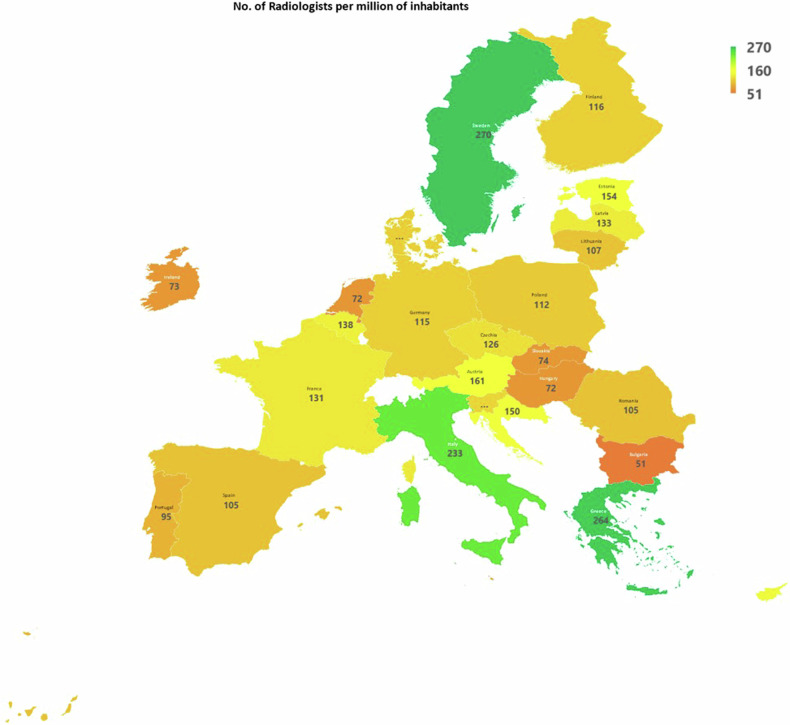
A prior study published in 2023 showed that AI not only improved diagnostic accuracy but also reduced radiologist workload by more than 30%. The study compared double reading by two radiologists to single reading supported by AI and was conducted in Hungary using the Kheiron algorithm, notably in a country with one of the lowest radiologist-to-population ratios in Europe.
This finding is particularly relevant given the outlook for the European radiology workforce. In many countries, a significant proportion of radiologists are approaching retirement, and workforce shortages are expected to worsen. Since double reading remains the standard in most European screening programs, AI offers a clear opportunity to reduce workload, either by substituting one reader or by accelerating decision-making without compromising quality. In the U.S., where screening typically relies on single-reader workflows, the impact on workload is still under debate.
In my opinion, this needs further research and will be demonstrated while standardizing new AI protocols. There is a belief that accelerating imaging review and decision will not reduce workload as it will finally enable more screening. I don’t think this will happen as it won’t be economically sustainable to significantly increase the number of imaging processes.
Critical 10% and Advanced Imaging
There is a smaller but clinically critical subgroup within breast cancer screening, roughly 10% of cases, where mammography reaches its limits. This includes women at higher risk and, especially, those with dense breast tissue. Dense breasts are not only harder to image; they are also associated with a higher cancer risk, and cancers in these patients are more likely to be missed at screening or detected later as interval cancers, with worse outcomes.
In this context, MRI becomes essential. Its higher sensitivity allows clinicians to see what mammography can’t. But that sensitivity comes with a trade-off: more false positives, which means higher costs.
AI will need to improve triaging and better characterization of early detection cases. Quibim, one of our portfolio companies, which deploys AI on imaging to better diagnose cancer, is currently working on certifying its QP-Breast® algorithm. This will change how these high-risk cohorts are diagnosed, improving characterization of lesions, and enabling access to better treatment choices. This means lower costs in the long term and better survivorship rates.
Why AI in Breast Cancer Screening Is Not Standardized (Yet)
Given the results outlined above, the question feels almost unavoidable: why isn’t AI already a standard part of breast cancer screening?
We now have solid evidence showing that AI-supported screening improves early cancer detection. Detection rates increase by up to ~30% in some settings, while radiologist workload decreases significantly.
The economic logic is equally compelling. Treating stage III breast cancer is substantially more expensive than treating the disease detected at stage I or II. Earlier detection or even identifying high-risk cases sooner translates into meaningful long-term cost savings for healthcare systems.
But screening remains one of the most demanding environments in healthcare. The clinical and regulatory bar for population-level screening is exceptionally high. Any change affects millions of asymptomatic individuals, which is why demands for real-world evidence have been non-negotiable. That evidence is finally starting to emerge.
Another critical factor is incentive alignment. The benefits of AI in screening for fewer advanced cancers do not materialize immediately for all stakeholders. Costs and risks are borne upfront. This asymmetry makes early adoption inherently cautious, particularly in publicly funded systems.
Standardizing AI also requires revisiting deeply embedded protocols. Screening workflows are rigorously defined, reimbursement pathways are fixed, and responsibility for clinical decisions is carefully allocated. Introducing AI is not just a technical upgrade. It redefines how decisions are made, who is accountable, and how value is measured.

