
Oska Health has raised a €11 million seed round toscale its continuous care model for high-risk, chronically ill patients. The round is led by Capricorn Partners and SwissHealth Ventures, with participation from Revent, Calm Storm, LBBW Venture Capital, BMH, GoHub Ventures, and Aurum Impact. The new capital will accelerate the expansion of Oska’s AI-powered care infrastructure, which augments care teams and has already been improving the daily lives of chronically ill patients for over three years.
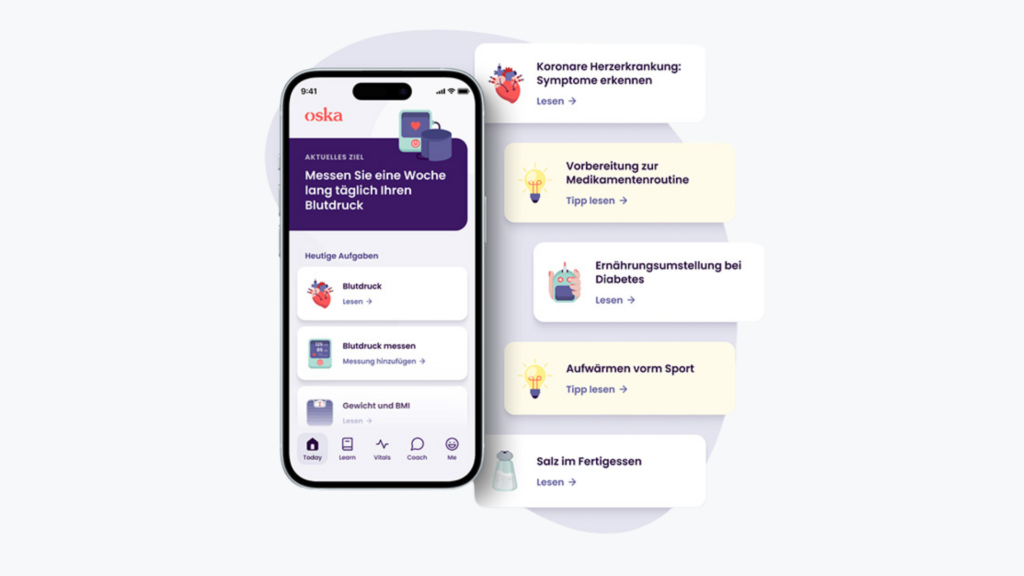
Oska supports so-called multimorbid patients: those living with multiple chronic conditions such as chronic kidney disease (CKD), diabetes and hypertension, affecting several million people in Europe. Therefore, Oska fuses human coaching with AI‑enabled care delivery to support chronic patients at scale. Certified health coaches deliver continuous care via video calls, chat, and its dedicated digital therapy app. The goal is to translate physicians’ recommendations on lifestyle and/or dietary changes into everyday practice. Thereby reducing complications and avoidable hospitalizations.
“Chronic diseases cannot be managed in isolated doctor visits; they are decided in everyday life,” says Niklas Best, CEO and co-founder of Oska. “We combine human support with AI to close this gap. Our technology supports our coaches, reduces administrative burden, and makes high-quality chronic care scalable.”
Oska already partners with more than 20 statutory health insurance funds in Germany. The service is free of charge for insured members. Physicians retain full therapeutic responsibility, while Oska supports implementation in everyday life, without requiring additional software or process changes in medical practices.
What Oska’s Seed Round Means for Chronic Disease Care
National and international investors see this approach as a scalable model addressing one of the most pressing challenges in modern healthcare systems: the care of multimorbid high-risk patients.
“Oska is tackling a structural bottleneck in how healthcare is delivered to chronically ill patients,” says Antoine D’Hollander, Investment Director at Belgian VC fund Capricorn Partners. “Over the past years, the team has built an impressive track record in partnering with health insurance funds that use Oska to organize continuous care for chronically ill patients in a medically meaningful and economically sustainable way.”
The participation of SwissHealth Ventures in Oska’s seed round underscores the international relevance of the model. “For us, it is crucial that care has an impact where it has been least effective so far: between doctor visits,” says Markus Rommel, Principal at SwissHealth Ventures. “Oska has developed a compelling and scalable model to achieve exactly that.”
German VC-firm Revent and its General Partner Otto Birnbaum, experienced early-stage investors in healthtech ventures among others, draw a similar picture. “We have backed Oska Health for over two years now and are thrilled to see their growth rate of >8x, proving what a significant issue they are addressing. We are convinced that their AI-enabled coaching will help not only the millions of people suffering from chronic disease, but our strained health system as a whole.”
Chronic diseases pose enormous challenges to healthcare systems worldwide. While medical care is well organized, it often fails in everyday implementation between doctor visits: patients struggle to change their behavior in order to improve their health. Around 50% of chronically ill patients do not take their medication correctly, and approximately 80% fail to sustainably change their lifestyle. This not only reduces quality of life but also drives costs. Roughly 70% of total healthcare expenditures in Germany are attributable to chronically ill patients, and the trend is rising. Already 1 out of 10 Europeans suffers from chronic kidney disease (CKD) and in Germany alone, there are 9 million adults affected.
Founded in 2022 in Frankfurt, Oska is currently active in the German market as a certified medical device. With the new capital, the company plans to expand its team, further develop its technological infrastructure, and scale with health insurers and physician networks.

