
Europe is rearming, but not just with weapons. The real race is technological. As global tensions rise, the continent faces a new kind of challenge: building a defense tech shield strong enough to secure its sovereignty and agile enough to compete with the U.S. and China.
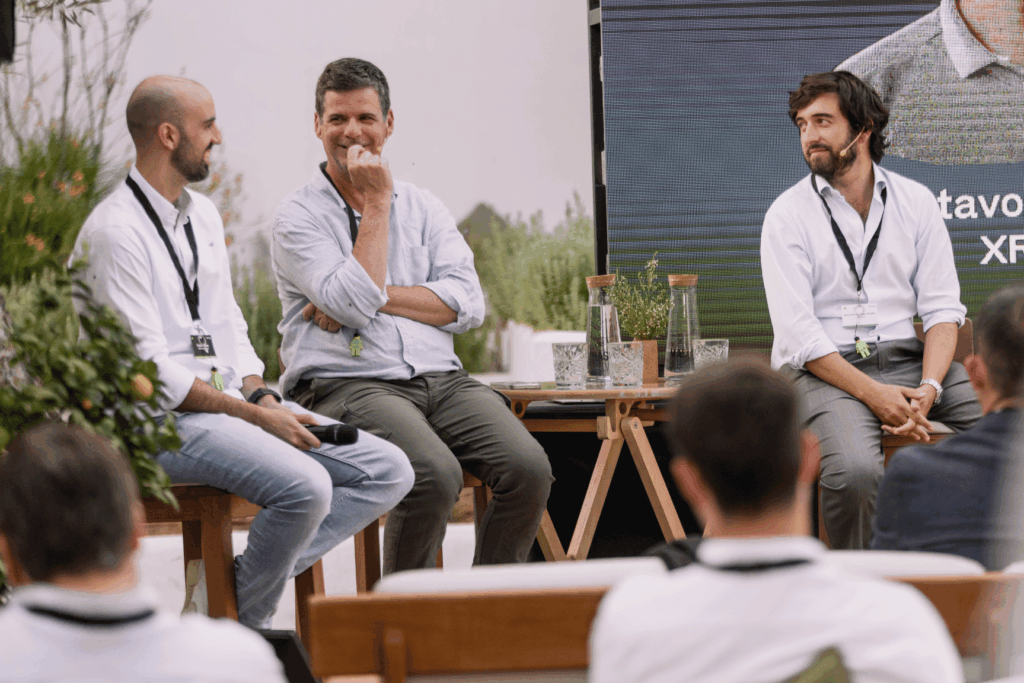
At The Vertex Summit, GoHub Ventures’ annual gathering at Bellver Blue Tech Zone, Gustavo Medina (XRF) and Ricardo Gómez-Acebo (Hyperion Fund) shared how defense innovation is being redefined in Europe, driven by startups, dual-use technologies, and a new urgency to close the capability gap.
From Battlefield R&D to Civilian Innovation and Back Again
For decades, defense shaped the technologies that transformed daily life. The Internet, GPS, and imaging technologies all began as military projects before becoming part of our everyday reality.
Today, that flow has reversed; private companies are now exporting innovation into defense, from AI-powered simulation to immersive command systems originally designed for gaming. As Gustavo put it, “It used to be military to civilian. Now it’s civilian to military.”
This dual-use shift is blurring the line between defense and technology. Startups are bringing agility, creativity, and a focus on user experience to a sector traditionally dominated by large contractors and national programs. The defense tech market, once controlled by established primes, is opening up to new actors who move faster and think differently: reshaping how capability and innovation emerge.
That transformation is happening just as Europe faces its own wake-up call. The war in Ukraine and rising global instability have pushed defense innovation higher on political and investment agendas through initiatives like the European Defense Fund. Yet urgency hasn’t translated into action fast enough. Europe still trails the U.S. and China in both funding and execution, held back by complex procurement systems and fragmented national agendas.
At the same time, opportunities are emerging in unexpected places. Hardware may dominate defense budgets, but the next frontier lies in software: from predictive maintenance tools to intuitive interfaces that enhance decision-making and speed.
Companies like XRF are part of this new wave of European defense tech innovators, using AI and design thinking to transform how information is perceived and acted upon. By simplifying complexity, they help decision-makers navigate uncertainty with clarity and confidence, bringing modern design thinking and technological agility to the sector.
The Race to Be Ready
Timing is everything in this industry. “You need to be five minutes before the tender,” Gustavo noted. Defense contracts move slowly, but the opportunity window closes quickly. Startups that anticipate programs and have ready-to-deploy technology before official calls are published gain a decisive advantage.
Additionally, while legacy primes may seem like competitors, they are in fact essential allies. They bring the scale, solvency, and supply-chain reliability required, while startups provide the speed, creativity, and technical depth the industry needs. As Ricardo Gómez-Acebo explained, “You need the primes. The question is how they leverage smaller, faster players.”
Europe’s challenge is no longer about capability but coordination. Twenty-seven countries continue to develop parallel systems instead of consolidating efforts under shared programs. “We’re far from autonomy,” Ricardo warned. “The problem isn’t capability, it’s fragmentation.” Achieving true strategic sovereignty will mean unifying procurement, harmonizing standards, and building a continental approach to defense tech innovation.
The discussion at The Vertex Summit captured a pivotal moment for Europe. The continent has the talent, the technology, and the momentum; it now needs alignment.
Building Europe’s tech shield will depend on collaboration: between startups and primes, between software and hardware, between national ambition and shared purpose. The technologies that once emerged from defense now flow back into it and, this time, they may define not just how Europe defends itself, but how it leads.

