
It’s no secret that the defense tech sector is exploding: just a look at the headlines, mega funding rounds, high-profile events, and programs like Palantir for Startups. But as with any hot sector, there’s also a ton of noise. Misconceptions, old-school mentalities, and myths still blur reality, especially in Europe where the momentum is real, but often misunderstood.
A few years ago, talking about defense tech startups in Europe would raise eyebrows. Fast-forward to today, and the European defense tech ecosystem is booming. Over 300 startups, billions in investment, and governments waking up to the fact that sovereignty and innovation go hand in hand.
We’re seeing massive growth from established players like Anduril (x2 valuation to $28B), Saronic (bookings from $50M to $350M in a single year, valued at $5B with 3 years in the market), or Palantir.
In Europe, there’s been a rise of serious players like Helsing (valued at $5B in just 3 years), Destinus ($70M revenue in 3 years for autonomous flights), ARX Robotics (growing role in Ukraine’s war), NATO raising a $1B venture fund (NIF), and Spain pledging €10.5B in defense spending.
Something has changed, fast. This defense tech boom has been driven by three main factors:
- Geopolitical Urgency: Russia, shifting US alliances, and instability are all pushing European nations to build in-house capabilities.
- Tech Tailwinds: AI, autonomy, sensors, cyber, dual-use technology is maturing fast.
- Policy Shifts: More defense-specific VC funds, public funding tools, NATO doubling budgets… The market is opening.
Common Misconceptions in Defense Tech
- You can’t go international, defense is too sovereign: Sure, home turf helps, and politics still play a key role in international adoption, but even legacy players have large chunks of their revenue coming from abroad. Startups should initially focus on building credibility/value on national ground, but build international sales from day one, whether through neutral branding, strategic hires, lobbying, or focusing on NATO-driven interoperability needs.
- Low scaling capacity: The growth model might look different (step-function rather than linear SaaS curves), but when defense budgets kick in, they’re sticky, recurring, and resilient. The need for innovation and tech disruption are increasing the scaling capacity across the board.
- Sales cycles are brutal and slow: Yes, the main commercial routes can be slow, and lobbying will still play a crucial role. But there are workarounds: i) special forces move fast and love innovation; ii) subcontracting into existing programs; iii) key hires with strong networks can bypass the process; iv) pilot testing is effective; v) work your brand awareness.
- Competition is hard: Legacy players aren’t invincible. They move slowly and often struggle with software innovations. Next-gen players are getting billion-dollar contracts either directly or partnering with incumbents to win together.
- Military or defense background is a must: Yes, deep domain expertise helps, but many successful founders come from adjacent industries; AI, robotics, cyber, enterprise SaaS, and bring a fresh, product-first mindset.
- Defense tech = offensive weapons: Many assume “defense” means missiles or any lethal systems. But a huge part of defense tech is about resilience, protection, and support and has a key aspect in dual-use civilian play: communications, disaster response, infrastructure protection, cyber defense, logistics and supply chain, space, etc.
European Defense Tech Momentum
Europe’s defense tech sector is entering a phase of dynamic innovation. AI-powered command systems capable of real-time, resilient, and explainable decision-making are emerging as a strategic priority: explainable AI is the holy grail. At the same time, autonomy is expanding across all domains,land, sea, and air, with startups like Kraken and Arx Robotics at the forefront. Plus, cyber and electronic warfare, especially involving RF, jamming, and signal intelligence, represent a massive and rapidly growing opportunity.
Yet despite this momentum, the path forward is not one without friction. Many startups still face daunting hurdles navigating complex procurement processes and breaking through the legacy mindshare dominated by established players. Early-stage capital remains a challenge; though that’s changing fast, with new funding channels for dual-use technologies and defense-first ventures beginning to unlock.
As highlighted by Mckinsey, to fully capitalize on its potential, Europe needs a shift in mindset.
- Shift in public perception: more founders driving defense tech innovation.
- Facilitate investment of private and public capital.
- Cultural shift towards a more agile procurement process.
- Strengthen collaboration between startups and incumbents.
GoHub Ventures’ Bet on Defense Tech: XRF
At GoHub Ventures, we’re proud to back XRF, a Spanish defense tech startup building AI-powered simulations and data interoperability that help decision-makers test and react in complex and uncertain environments. Strong dual-use approach, growing demand from the defense sector, and international since day one. The kind of technology we believe will define the future of European defense autonomy.

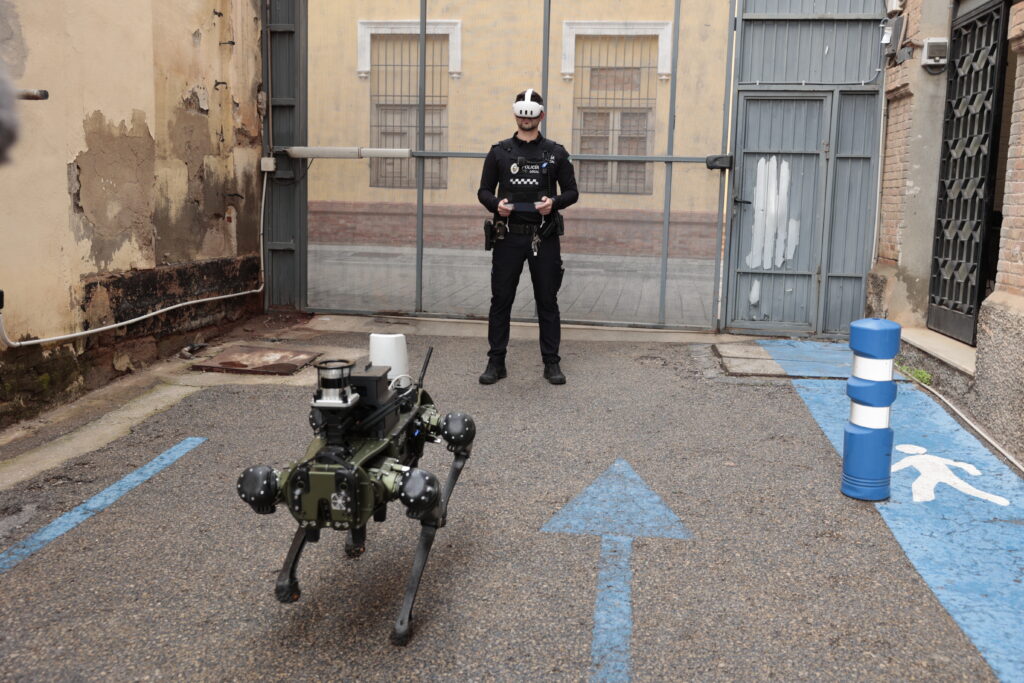
Being part of this defense tech boom hasn’t been easy for the startup. As Gustavo Medina, CEO of XRF, explains “Nowadays the access to any Ministry of Defense is exclusively linked to big corporations which makes it difficult for small and medium tech companies to bring innovation to the sector.” This causes an almost forced partnership with a corporation to enter the sector. From their experience, having a big corporation like Telefónica as a facilitator has been crucial to accelerating XRF’s commercial growth.
“Tech adoption in the defense sector needs innovation, collaboration, transparency, and a clear entry path for adoption. To impact the future of European defense autonomy, we need an open and collaborative ecosystem that bets on talent, ideas, and innovation.”, added Gustavo.
Final Word: Why Defense Tech Matters
Defense tech isn’t just about war and budgets. It’s about sovereignty, resilience, and the kind of innovation that can spin out to civilian uses too. Europe’s finally leaning in and for the first time in decades, it has the talent, the urgency, and the capital to compete.
If you’re building in this space, we’d love to talk.

