
Technology clearly sprinted in 2025. New capabilities reached the market faster than ever, but adoption often lagged behind ambition. Across industries, execution and deployment emerged as the main bottlenecks.
Based on a review of recent market data and GoHub Ventures’ experience investing in B2B technology, our view is that the most relevant tech and VC investment trends for 2026 are less about new technological breakthroughs. Instead, they focus on where existing technologies could be deployed reliably and at scale. This perspective shapes our outlook across B2B software, digital health, and dual-use technology.
B2B Software in the Agentic Era
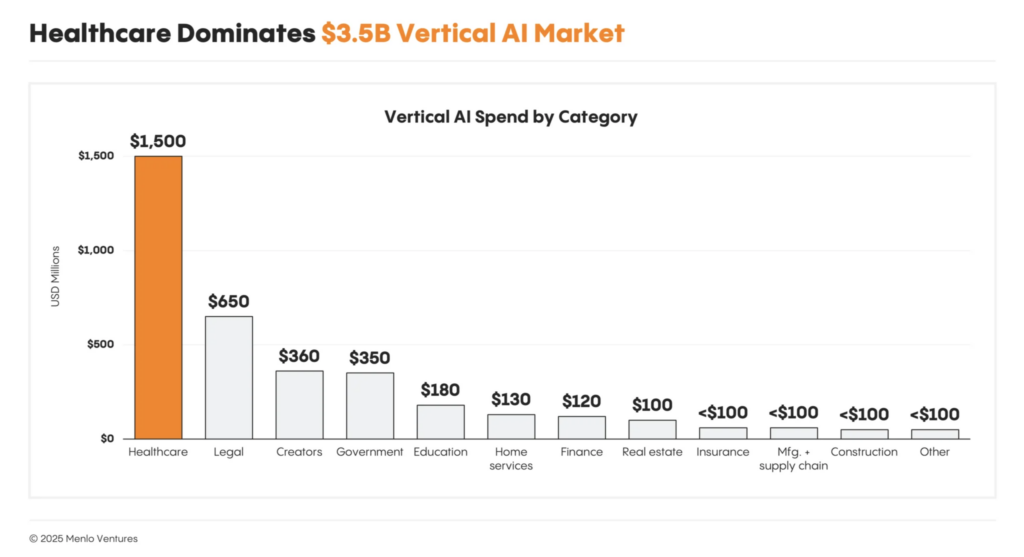
We are entering the operational era of B2B. The experimentation phase is over, and the market now demands measurable outcomes. Consequently, the opportunity in 2026 shifts from raw model capability to organizational reliability. The focus is on building the infrastructure, workflows, and governance that allow AI to finally get to work. Plus, accelerating the rise of vertical AI agents across healthcare, finance and accounting, legal, supply chain, industrials, and other core operational workflows.
Infrastructure and Execution Layers for AI
As AI capabilities mature, execution has become the main constraint. Autonomous agents are expected to operate inside enterprise environments built for humans, not machines. This gap is driving demand for new infrastructure layers that make AI deployable in production.
One opportunity lies in adapting existing infrastructure so agents can act autonomously, with rails such as identity, payments, web search, and access to legacy systems. In parallel, agents need to be trained for the real world, through private data retrieval, multimodal data pipelines and systems that turn raw operational data into something agents can use end to end.
A second layer focuses on enterprise AI adoption itself. Most AI initiatives still fail at the pilot stage, leaving room for horizontal platforms that help companies deploy AI in production by unifying models, orchestration, evaluation, routing, and auditability. The goal would be to make AI usage visible, governed, and reliable across the organization, rather than fragmented or hidden.
Agents as Operators, Not Tools
As agents become more capable, single-agent setups break down. One of the clearest opportunities appears in multi-agent systems embedded in core business operations. Here, specialized agents coordinate across a single workflow, often with a supervising layer on top. This dynamic is already visible in AI-native ERP, planning, supply chain, and procurement, where agents plan, exchange information, negotiate, and execute tasks across existing systems.
More broadly, a shift is emerging through full-stack AI-native firms. Instead of selling software seats to incumbents, these teams build AI-native accounting, legal, or insurance operations that can function at radically lower cost and finally serve the long tail of customers underserved by traditional providers.
Physical AI and the Next Bottlenecks
A big chunk of value sits outside the browser. Physical AI and real-world software focus on systems that let AI run close to hardware, sensors, and machines, where latency, reliability, and cost constraints matter. This includes edge inference, robotics devtools, and platforms that combine cameras and sensors into real-time operational visibility.
At the same time, code generation is already commoditizing, pushing the bottleneck downstream. The opportunity is shifting toward automating testing, QA, security, and deployment, with CI/CD and AI security layers built for pipelines where agents produce and validate most of the code.
Finally, compute, energy, and scaling limits are becoming real constraints. GPU reliability, rising costs, and limited power and grid capacity are now real scaling challenges. This creates space for software that optimizes inference cost and manages unstable GPU fleets. It also enables grid-aware workloads and more efficient approaches, such as domain-specific small models for constrained environments.
Toward More Efficient Healthcare Systems
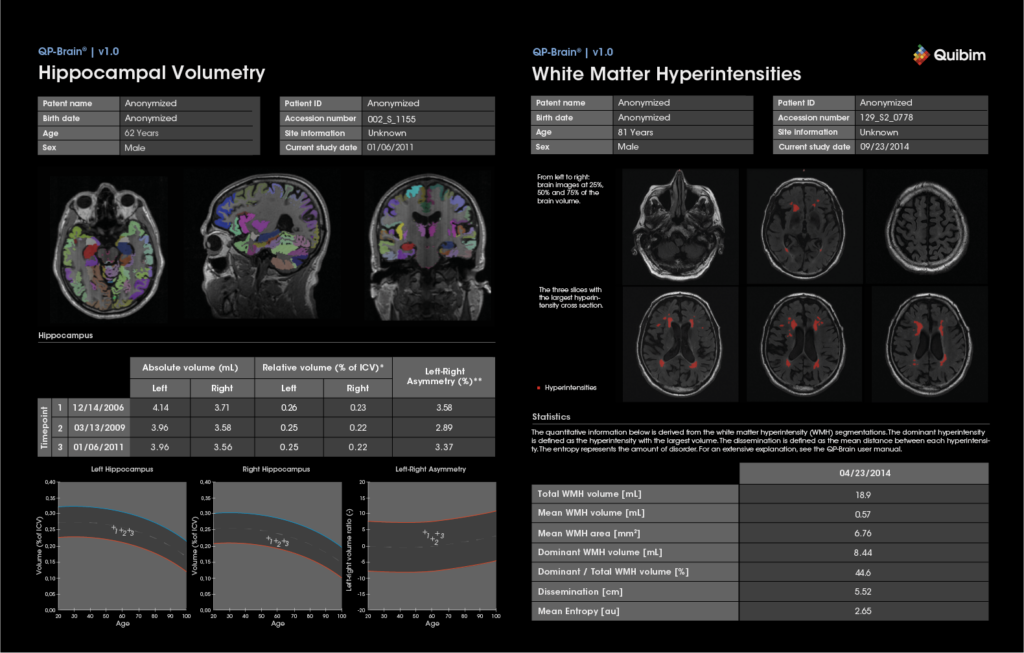
Healthcare has seen an unprecedented deployment of capital aimed at improving system efficiency and unlocking the potential of AI across clinical and operational use cases. From documentation and triage to revenue cycle management and care coordination, AI has been rapidly introduced across the stack in an effort to relieve healthcare systems. In medical imaging, for example, platforms such as Quibim illustrate how artificial intelligence is being successfully integrated to turn imaging data into actionable predictions.
However, this wave of experimentation has revealed a more fundamental issue: healthcare workflows do not evolve at the same speed as software. Many AI solutions were deployed faster than the underlying systems could absorb them, exposing deep integration gaps and operational friction. Rather than a lack of innovation, the core constraint has proven to be structural: fragmented data, rigid workflows, and legacy infrastructure not designed for continuous AI-driven adaptation.
As a result, the conversation is shifting. Becoming AI-ready in healthcare is less about deploying additional tools and more about strengthening core foundations: integration, interoperability, and workflow alignment. Without them, even the most advanced AI struggles to move from promise to sustained impact.
Where AI Is Already Scaling
The healthcare AI use cases that have scaled are practical and well defined. Imaging and radiology, ambient clinical documentation, early risk detection, coding, and in-hospital automation show the strongest adoption. These solutions succeed because they deliver clear value with minimal change to clinician behavior.
Alongside this, healthcare is gradually shifting from reactive care to more preventive approaches. Preventive solutions are increasingly built around payer incentives rather than provider experimentation. Hybrid models that combine digital monitoring with physical care could gain further traction, while remote monitoring would increasingly function as a core data layer rather than a standalone product.
In pharma and life sciences, AI investment is likely to remain focused on early stages such as drug discovery, molecular design, and R&D workflows. The market is moving away from broad discovery platforms toward tools that support lab operations, data processing, and decision-making. AI is becoming core infrastructure for research productivity.
Defense Tech Is Shaped by Public Spending
Public spending and geopolitical dynamics will continue to drive dual-use technologies. As geopolitical tensions across the globe persist, government investment continues to increase. Not only in budget size but in procurement approaches that favor faster and more adaptable technological solutions.
Spending is becoming more structural. The European Investment Bank plans to invest €4.5B in defense projects in 2026, up from €3.5B in 2025, reinforcing procurement pathways and validating the scalability of dual-use technologies. This reduces demand risk and makes defense more investable for startups operating across public and commercial markets.
This environment is likely to favor software-first, dual-use companies that can align with procurement realities while retaining commercial scalability.
What to Expect in 2026
Looking ahead to 2026, the defining VC investment trends for B2B software, digital health, and dual-use technologies appear increasingly shaped by execution rather than experimentation. AI is becoming infrastructure, deployment the differentiator, and public spending dynamics are shaping entire markets.
From our perspective, the companies most likely to emerge as category leaders are those designed to operate inside complex, regulated, and mission-critical environments from day one.

